How to Use AI to Find and Complete Airtasker Jobs Faster (And Earn More Per Week)
Most Airtasker guides will tell you to respond quickly and write a friendly bio. What they won't tell you is that the average offer message on the platform reads like it was bashed out in thirty seconds — because it usually was. "Hi, I can do this for you, please pick me." That's the competition. And if you've ever wondered why a new Tasker with no reviews struggles to win anything, that copy-paste flood is a big part of it.
The interesting bit is that almost nobody is using AI to fix it. While everyone else is grinding through cleaning jobs and furniture removals, a quieter group of Taskers are using ChatGPT and Claude to win more bids, deliver digital work in a fraction of the time, and turn Airtasker from manual labour into something closer to a partly-automated side hustle.
General information only. Income figures in this article are estimates based on publicly available reports and community discussions — results vary significantly based on effort, niche, and market conditions. This is not financial, legal, or tax advice. For guidance specific to your situation, consult the ATO, a registered tax agent, or a qualified professional.
Why Airtasker + AI Is an Underrated Combination
Here's the thing most people miss about the Airtasker AI side hustle in Australia: the platform openly hosts categories like "Computer & IT," "Design," and "Business" right alongside the cleaning and removals gigs. These are exactly the tasks where AI gives you a genuine edge — and they attract far less competition than the physical work everyone fights over.
A typical "write five product descriptions" task posted at $120 might take ninety minutes if you're writing from scratch. With ChatGPT drafting and you editing for accuracy and brand voice, it's twenty to thirty minutes. Same pay, a third of the time. Do that consistently and your effective hourly rate stops looking like gig work and starts looking like freelancing.
The realistic range for someone treating this seriously, part-time, is roughly $300–$1,500 AUD/month — but those two ends represent very different people. The $300 end is someone in their first couple of months, still building reviews, losing bids before their profile has any traction. The $1,500 end is someone six to twelve months in, specialising in digital tasks, using AI to take on more volume without burning out. Most people land somewhere in the $600–$900 range once they've got twenty-odd reviews and know which tasks to chase.
Which Tasks Are Worth Your Time (And Which Aren't)
Not every task suits AI. The sweet spot is anything text-heavy, research-based, or template-driven: copywriting, blog posts, product descriptions, data entry, spreadsheet cleanup, market research, email drafting, basic flyer and social-tile design, resume and cover letter writing.
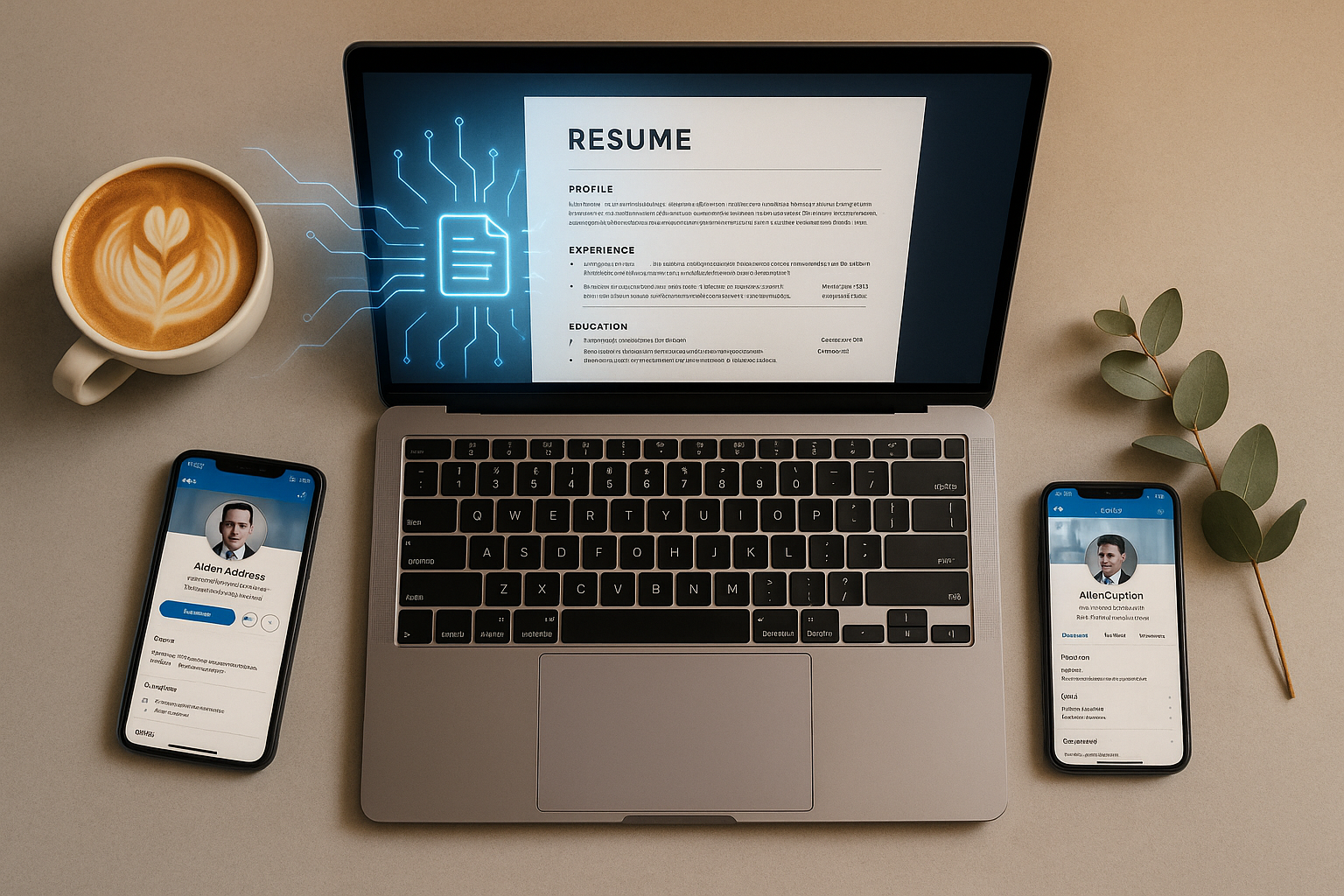
That last one is a category worth lingering on — there's enough demand that some people build an entire AI-powered resume and LinkedIn writing service for Australian job seekers off the back of it, using Airtasker as the lead source.
Avoid anything requiring physical presence, a trade licence, or hands-on judgement AI can't fake. And worth noting: Airtasker's bundled Chubb public liability cover applies to "certain task activities" — generally physical ones. Digital work tends to fall outside it, which sounds like a downside but isn't. No ladders, no breakages, no insurance anxiety. Lower barrier, lower risk.
The counterintuitive part? The least glamorous tasks often pay best per minute. Data entry feels beneath people, so fewer Taskers bid, and the ones who do charge manual-labour rates. With AI-assisted formatting, you finish in half the time at a better margin.

Setting Up a Profile That Actually Wins Offers
Airtasker's own copy says posters evaluate you on "transaction-verified ratings, reviews, completion rating, skills badges and portfolios." Translation: with zero reviews, you're competing almost purely on price. With a 4.9-star profile and a strong completion rate, you can charge a premium for identical work.
So the first five to ten jobs matter more than any others you'll ever do. The strategy that comes up again and again in Australian gig communities is simple: take your first three to five tasks at slightly below market rate, deliver them flawlessly, bank the five-star reviews, then raise your prices. You're buying social proof, not chasing profit, in those opening weeks.
Use AI for the bio too. Feed ChatGPT your actual skills and ask for three short, specific profile versions — then pick the one that sounds like you, not a corporate brochure. Specific beats slick. "I write clean, SEO-friendly product copy and turn spreadsheets around same-day" lands better than "passionate, hardworking professional."
The Offer Message Workflow That Beats Copy-Paste
This is the single biggest lever a new Tasker can pull, and almost nobody does it well.
Posters consistently say they ignore generic bids and pick Taskers who reference specific details from the task. So your job is to write a personalised three-sentence offer for every bid — and AI lets you do that in about sixty seconds instead of five minutes.
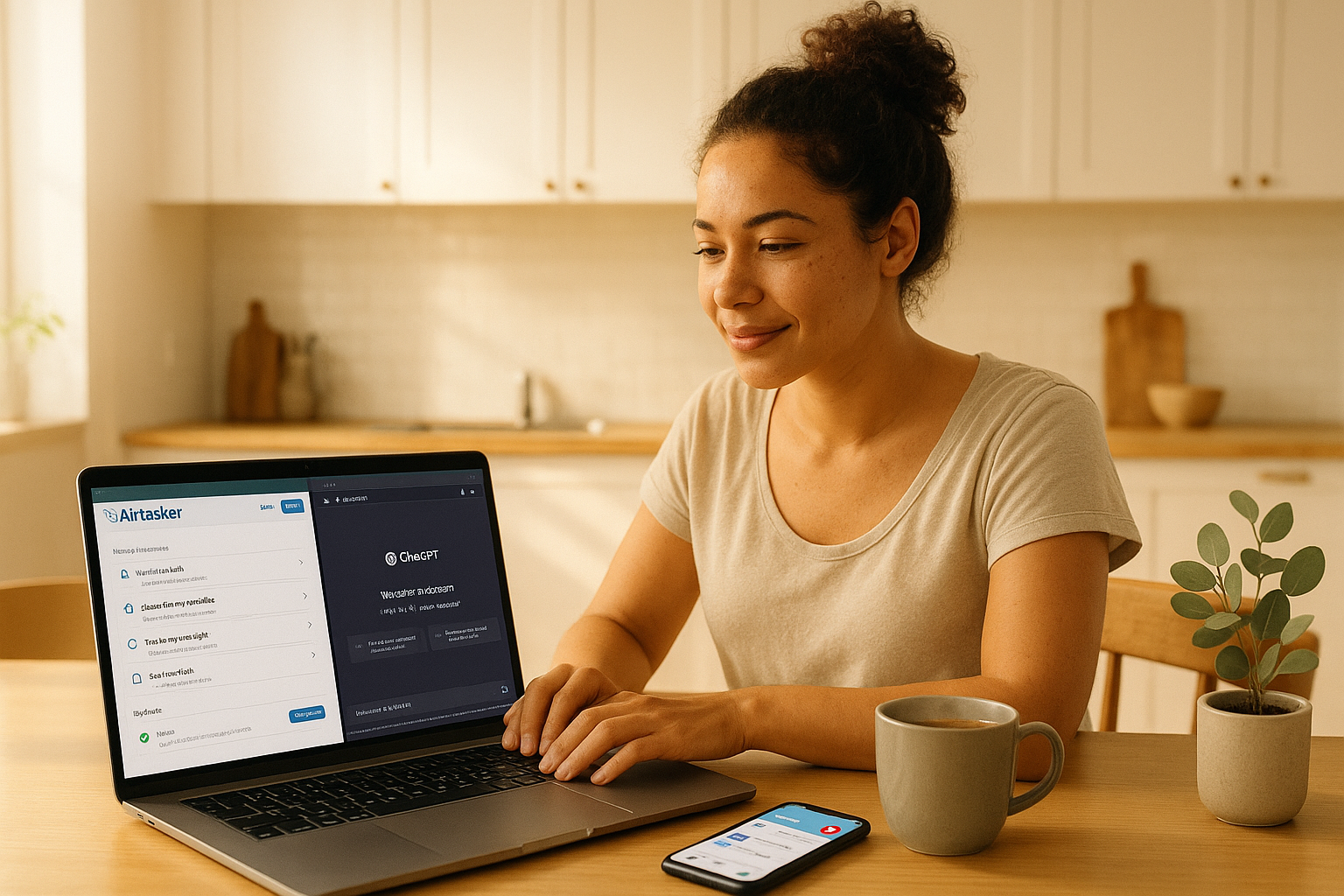
The workflow: paste the full task description into ChatGPT or Claude with a prompt like — "You're an experienced Airtasker Tasker. Write a warm, confident 3-sentence offer message for this task. Reference one specific detail from the description, state how I'll deliver it, and give a realistic timeframe. No fluff, Australian English." Then paste the task.
You'll get a tailored draft. Read it, tweak one line so it sounds human, send. The tone-matching matters: keep it professional for "Business" tasks, warmer for personal ones like writing a wedding speech. Over a week of bidding, that's the difference between a 10% and a 30% acceptance rate.
One more AI use here that protects your money: before you start, get the tool to draft a quick scope-confirmation message — "Just confirming you need X, Y and Z delivered as a Word doc by Friday." Because Airtasker Pay holds the agreed amount in escrow and only releases it when the poster marks the task complete, delivering exactly to spec the first time is how you actually get paid.
Pricing So the Service Fee Doesn't Eat You Alive
Here's what trips up new Taskers: Airtasker's service fee comes off your payment, not the poster's. The exact rate has shifted over the years — historically a tiered structure reported around 10–20% depending on task value, but check the current figures at the Airtasker Help Centre because they change.
The practical maths: a task posted at $100, with a ~15–20% fee, nets you somewhere around $80–$85. If you bid at the posted budget without accounting for that, you're quietly earning less than you think. Experienced Taskers factor the fee in from day one.
AI helps here too — ask it to research typical going rates for a task type before you bid, so you're anchored to the market rather than guessing. Because you're delivering faster than manual competitors, you can often price slightly above the cheapest bidder while still finishing first, which improves both your margin and your review velocity.
A Realistic Weekly Rhythm
Consider a composite based on common experiences. Priya, in Adelaide, works four days a week in admin and wanted extra income without leaving the house at night. She focused entirely on "Business" and "Design" tasks.
Her week looks like this: thirty minutes each evening scanning new digital tasks and firing off six to eight AI-assisted personalised offers. Out of roughly ten offers a week, she wins four to five tasks. Each takes between twenty minutes and an hour of actual work — a batch of product descriptions, a tidied-up customer database, a couple of Canva flyers built from a ChatGPT-generated brief.
Weeks one to four were about reviews, not revenue — she netted maybe $180 that first month, deliberately underpricing to bank five-star ratings. By month four, with eighteen reviews and a 100% completion rate, she was clearing closer to $750 a month for around five hours of work a week. Not life-changing. But a genuinely good return on the time.
The Tax Reality You Can't Skip
Every dollar you earn on Airtasker is assessable income the ATO expects you to declare, whether or not you ever receive a formal payment summary. Gig workers on the platform are generally treated as independent contractors, not employees — so you're responsible for your own tax.
As general guidance, business.gov.au indicates you should register for an ABN (it's free) once you're operating in a business-like way, even casually. Whether your situation crosses that line is worth thinking through — this breakdown of whether you need an ABN for AI side income walks through what the ATO actually requires.
GST registration only becomes compulsory once your turnover across all business activity hits $75,000 AUD a year — well above most part-time Taskers — but verify current obligations at ato.gov.au or with a registered tax agent. Keep records of everything: income, plus deductible expenses like phone data and your AI subscription (Claude Pro or ChatGPT Plus at whatever the current rate is when you're reading this). When it's time to lodge, this guide on declaring AI side hustle income on your Australian tax return covers the deductions side properly.
Turning One-Off Gigs Into Something Bigger
The Taskers earning at the top of that range — $1,200 to $2,000+ a month — rarely do it on Airtasker volume alone. They use the platform as a client-acquisition channel. A poster who loved your product descriptions this month needs more next month, and the month after.
Airtasker keeps payments on-platform, with no cash-in-hand permitted, so handle ongoing relationships within their terms. But there's nothing stopping a happy client from posting their next task and inviting you directly. That repeat work — predictable, no bidding, no fee surprises once you understand the structure — is where Airtasker stops being a gig grind and starts becoming a small, real business built on the back of AI doing the heavy lifting.
Author