A Sydney HR coordinator I'll call Priya started rewriting resumes on Airtasker in her spare time for $80 a job. The first month was rough — she made maybe $340 after accounting for the hours she sank into each one, less than minimum wage if she's honest about it. But six months later she was charging $320 for a resume-and-LinkedIn combo, had a small waitlist, and was turning away the low-ballers. The thing that changed wasn't her writing talent. It was that she'd built a repeatable system using AI to do the heavy lifting, and learned to spend her own time only where it actually mattered.
That's the gap most people miss. Every month the ABS releases fresh Labour Force data, and there are consistently hundreds of thousands of Australians in job transition at any given time — people who are motivated, anxious, and willing to spend $200 to feel like they've got a fighting chance. Almost none of them have a resume that reflects the Australian market properly. That's your market.
General information only. Income figures in this article are estimates based on publicly available reports and community discussions — results vary significantly based on effort, niche, and market conditions. This is not financial, legal, or tax advice. For guidance specific to your situation, consult the ATO, a registered tax agent, or a qualified professional.
Why people pay for this when AI is free
The obvious objection: anyone can paste their job history into ChatGPT and ask for a resume. True. But most people don't, and the ones who try quickly discover the output is generic, weirdly American, and somehow makes them sound like everyone else. ChatGPT and Claude both default to US conventions — a one-page limit, an "objective statement" up top, the wrong date format. Australian resumes don't work that way. We don't include photos, age, or date of birth. Experienced candidates run to two or three pages. And the whole document lives or dies on quantified achievements, not buzzwords.
So what you're really selling isn't "AI writing." It's translation and judgement. You're the person who knows that a FIFO maintenance fitter's resume needs to foreground tickets and safety records, that an aged-care worker's needs to emphasise compliance and empathy in equal measure, and that an Australian Public Service application isn't a resume at all — it's a pitch document addressing Work Level Standards. AI doesn't know any of that. You do, or you can learn it.
What the service actually includes
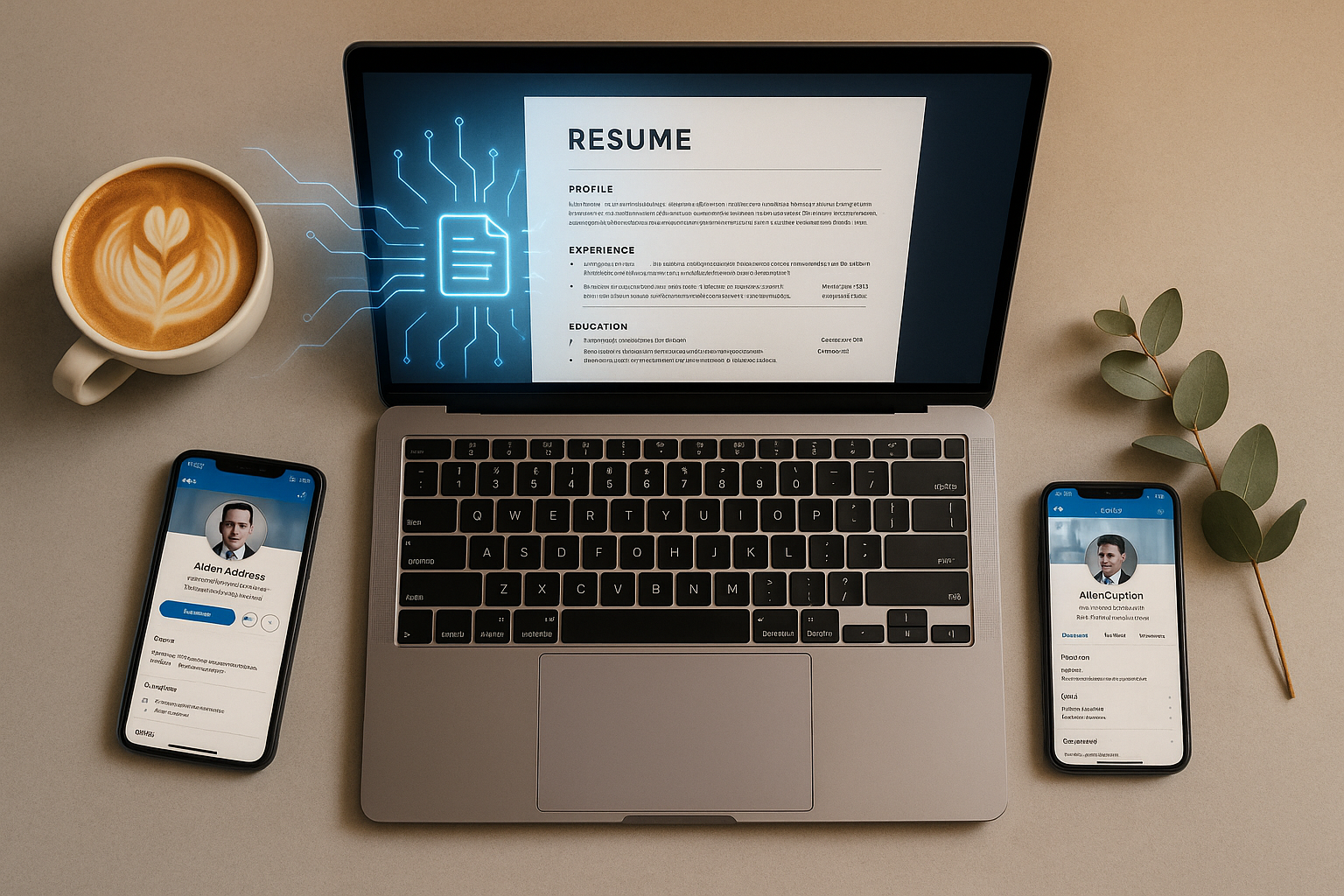
At its simplest, you're offering three things: a rewritten resume, a cover letter tailored to a specific role, and a LinkedIn profile rewrite. Most clients want some combination. The LinkedIn piece matters more than people expect — recruiters live on the platform, and a profile that mirrors the resume's strengths (without copying it word-for-word) is genuinely valuable. Positioning yourself as an AI LinkedIn profile writer in Australia who understands how local recruiters search is a real differentiator.
The premium tier is where the money is, though. An APS selection-criteria response — written in the STAR format, addressing the right capabilities — can command $300 to $600 because job seekers know the stakes and know they'll fumble it alone. Same logic applies to executive-level resumes. These take longer, but the per-hour return is far better than churning out $150 jobs.
The tools, and where they stop
Your engine will be ChatGPT or Claude. Both are capable; many people find Claude slightly better at longer, more nuanced drafting, while ChatGPT is faster for quick iterations. You'll want a paid plan for either — ChatGPT Plus or Claude Pro at whatever the current rate is when you're reading this — because the free tiers throttle you mid-project. For formatting, Canva Pro gives you clean, ATS-friendly templates without needing design skills.

The piece most beginners skip is ATS optimisation. Applicant tracking systems scan resumes before a human ever sees them, and a beautifully written document that the software can't parse is useless. Running a draft through a tool like Jobscan shows you how well a resume matches a specific job ad's keywords. It's a small step that lets you tell clients, truthfully, that their resume is optimised for the systems that screen them. That sentence alone justifies a higher price.
If you're already comfortable using AI for paid writing work, a lot of the same instincts carry over — it's worth reading how Australian freelancers are using ChatGPT to land $50/hour writing gigs on Fiverr, because the workflow discipline is identical.
A workflow that takes under an hour
Here's the shape of it once you're practised:
- Intake. Send a structured questionnaire — current role, target roles, three to five achievements with numbers attached, and the actual job ad they're chasing. The numbers are everything; AI can't invent that "reduced processing time by 30%" line, only you can prompt the client to surface it.
- Draft. Feed the questionnaire and job ad into your AI tool with a detailed prompt specifying Australian conventions, two-to-three pages, no photo, achievement-led bullet points.
- Human rewrite. This is the non-negotiable layer. You read every line, kill the robotic phrasing, fix the Americanisms, and inject the industry specifics the AI got wrong.
- ATS check and format. Run it through Jobscan, adjust keywords, drop it into a clean Canva template.
- Deliver and revise. One round of revisions included.
The strategy call — even a quick 15-minute phone chat — is where you extract the nuance no questionnaire captures. It's also why your service feels human and a $5 Fiverr mill doesn't.
Why the human edit protects you
On freelance forums, a recurring frustration is that AI-generated resumes are increasingly getting flagged — some hiring managers and ATS platforms are starting to detect the tell-tale rhythm of unedited machine text. If your service ships raw AI output, you'll get burned by it. The honest, defensible position is this: "I use AI as a research and drafting tool, but every document is written and edited by a human who understands your industry." That sentence is your entire competitive moat. Build the editorial process that makes it true.
What to charge
Most successful operators land on three tiers:
- Basic resume rewrite — $150–$200
- Resume + LinkedIn combo — $280–$350
- Premium package (cover letter, LinkedIn optimisation, and a 30-minute strategy call) — $450–$550
APS pitches and executive resumes sit above all of this as separate quotes. Don't apologise for these prices. A resume that helps someone land a $90,000 role is a rounding error against their first fortnight's pay.
As for income: in your first three months, expect $500–$800 AUD a month — roughly three to six clients at entry pricing while you build reviews. By the six-to-twelve-month mark, eight to twelve clients a month on combo packages, with referrals kicking in, puts you in the $1,500–$2,500 range. The top 10% who add executive and APS work, run a small social presence, and maintain a waitlist push toward $3,500–$5,000+. None of that is guaranteed, and your first few Airtasker jobs will almost certainly pay below minimum wage once you count the hours. That's the apprenticeship.
Where the Australian clients are
Airtasker is the natural first port of call — it's homegrown, skews local, and resume tasks appear regularly. It takes a service fee of roughly 10–20% depending on the job. The early game is brutal on price; people accept $50–$80 jobs purely to bank ten five-star reviews, then raise rates. Treat those first jobs as marketing spend, not income.
Beyond Airtasker, the most underserved niche is migrants and international students who need overseas experience reframed for Australian employers. The cultural translation is genuinely hard, the stakes are high (often tied to visa conditions), and these clients happily pay $250–$400. You'll find them in Facebook community groups and on LinkedIn. For broader market context and the language recruiters actually use, browsing live ads on Seek keeps your keyword instincts sharp.
The business side, kept simple
You'll need an ABN — it's free at abr.gov.au and takes about ten minutes. If you're unsure whether your situation requires one, this breakdown of whether you need an ABN for AI side income walks through what the ATO actually expects in 2026.
You don't register for GST until your turnover hits $75,000 a year — the ATO threshold. At $250 a client, that's 300 clients in twelve months, well beyond where most side-hustlers land, so you'll likely invoice without adding GST for a long while. Verify your current obligations at ato.gov.au or with a registered tax agent. For payments, both Stripe and PayPal work, though many practitioners prefer direct bank transfer to dodge the 1.75–2.9% processing fees.
One thing people get wrong: there's no "hobby threshold" for services income. As general guidance, every dollar you earn must be declared on your tax return, even in month one. The upside is the deductions — your AI subscriptions, Canva Pro, a portion of home internet and electricity, and any resume-writing courses are all generally claimable. The full picture of declaring AI side hustle income and claiming deductions is worth reading before your first BAS-free tax time.
Resume writing is unregulated across every state and territory — no licence required — which keeps the setup refreshingly light. For context on employment standards you might reference when advising clients, Fair Work is a solid free resource.
The operators who last aren't the fastest writers. They're the ones who treat AI as a drafting assistant, keep a human firmly in the loop, and pick a niche — APS, migrants, mining, aged care — where their judgement is worth paying for. Start there, bank your reviews, and raise your rates the moment you've earned the right to.
Author